
With his visit to Saudi Arabia, Dr Singh has re-emphasised that when it comes to the Gulf, Iran will not be the focus of Indian foreign policy.
India, however, would be well advised to take this decrease in Chinese defence spending with a pinch of salt, writes Harsh V Pant.
India has a government that has no strategic vision, a defence minister more interested in maintaining his 'clean' image, an armed forces leadership that is not interested in cleaning the mess within. Is it any wonder then that India presents itself as a sitting duck to its adversaries? asks Harsh V Pant.
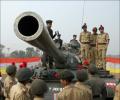
Defence and diplomacy are two sides of the same coin and India can't afford to ignore either of these.
Instead of ignoring Delhi, the West would be better served if it ceases to pander to Pakistan for short-term gains. Not supporting the only secular liberal democracy in the region will only embolden the radical Islamists in the long-term, writes Harsh V Pant.
It is imperative that India starts re-assessing its options and think clearly as to what India can do to preserve the balance of power in the Gulf region, writes Harsh V Pant.
In the short to medium term India's scarce resources would be better served by focusing on reducing the disparity with China in space. Developing ASAT capability is something that can wait, write Bharath Gopalaswamy and Harsh V Pant.
India should continue with its cautious approach toward Washington as the coming year will find Obama being even more obsessed with his domestic agenda than he has been so far, writes Harsh V Pant.
If the decade gone by was one that redefined the contours of global politics in the aftermath of September 11, 2001, it was also a decade that witnessed Indian foreign policy coming into its own, writes Harsh V Pant
Rao has only received contempt from his party colleagues. Being one of the most successful Indian prime ministers from a non-Nehru-Gandhi dynasty is not something that Congress-wallahs can accept easily.
'Our enemies can run rings around India because half of Indian political leadership has lost its intelligence and the other half has lost its nerve.'
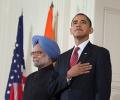
It was extraordinary that Obama had nothing to say about terrorism being inflicted on India from Pakistan, especially as he was speaking two days before the 26/11 anniversary, says Dr Harsh V Pant of the Department of Defence Studies, King's College, London.
It is a blatantly illegal and no holds barred war against the Indian State, against the idea and existence of the Indian democracy and must be dealt with an iron hand.
India needs to be aware of the potentially catastrophic implications of the collapse of governing authority in Pakistan and the possibility of its nuclear assets falloing in the wrong hands, writes Harsh V Pant.
'India is threatened much more than the US by the return of the Taliban to Afghanistan.'

It looks far from clear whether the climate change negotiations will succeed as developing countries like India want to be supported financially and through technology sharing with the rich industrialized world, says Harsh V Pant.
If Admiral Mehta's warning that India is long way off from catching up to China can generate the requisite debate in the Indian political establishment about the rise of China and its implications for Indian strategy, he would have done his bit for the nation.
Hillary Clinton's recent visit notwithstanding, the divergence between the US and India remains as stark as ever.
The cooling of the strategic partnership built by the Bush administration, which conferred on India the de facto nuclear weapon state status, introduces new uncertainties in Asia.
It would be exceedingly short-sighted of the Obama administration to ignore India in searching for a balance of power in Asia. India, however, needs to put its own house in order before crying hoarse over the changing winds in Washington. Global reassessment of India is primarily predicated on its recent economic rise, but India's rise will remain incomplete in the absence of a credible vision with a larger purpose.
